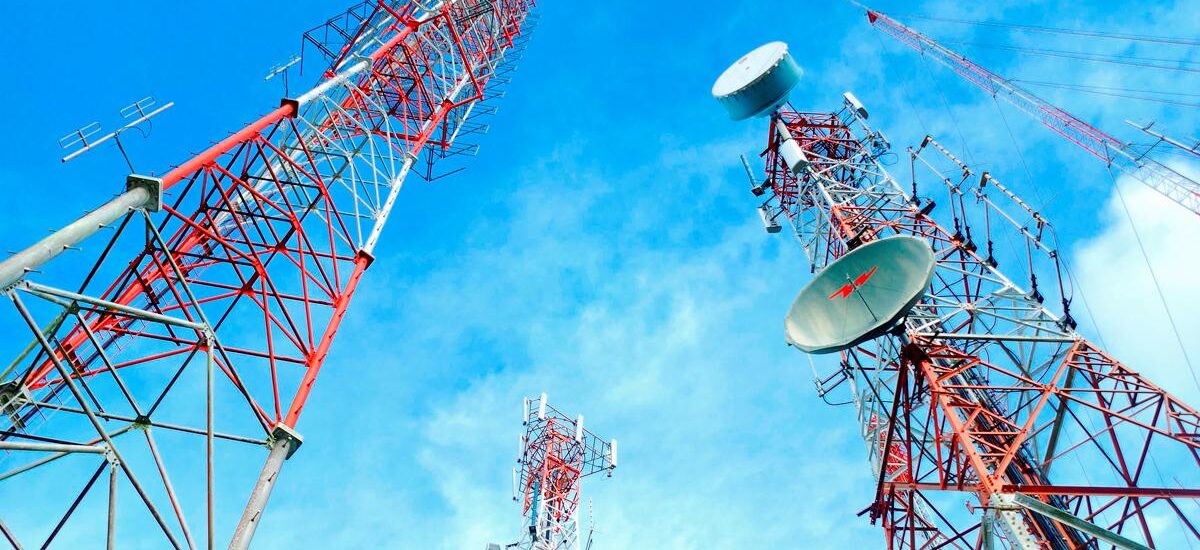
Telecommunications equipment today forms the backbone of digital connectivity. As businesses and consumers demand faster, more reliable communication, the market has responded with increasingly advanced solutions across switching, routing, wireless access, and data transport technologies.
Core Network Infrastructure
Routers and switches remain the foundation of any telecommunication network. Enterprise-grade brands such as Cisco, Juniper, and Huawei focus on high throughput, strong security, and low latency. Modern devices often support intelligent traffic management, automation capabilities, and high-availability features that keep networks stable even under heavy load. Edge computing support is another differentiator that helps service providers process data closer to users, improving performance.
Wireless Communications
The rollout of 5G continues to transform mobility. Equipment from Ericsson, Nokia, and Samsung shows strong performance on speed, coverage, and energy efficiency. Massive MIMO and beamforming technologies boost network capacity and improve user experience in densely populated areas. Wi-Fi 6 and 6E solutions complement cellular connectivity inside buildings with high throughput and improved device-handling capability.
Fiber-Optic Systems
Optical transmission equipment has advanced quickly, driven by global demand for high-bandwidth services. Dense Wavelength Division Multiplexing (DWDM) technology allows significant data scaling without new fiber deployment. Vendors like Ciena and Corning focus on reduced signal loss, greater durability, and simplified deployment options. Fiber-to-the-home (FTTH) equipment has also become more affordable, accelerating broadband access in rural and suburban regions.
Power and Continuity
Reliable power solutions are essential for telecommunications infrastructure. UPS systems and DC power supplies from companies such as APC and Delta ensure network uptime. Energy-efficient designs and intelligent monitoring reduce operational risks and support sustainability initiatives.
Security and Network Management
Cybersecurity is built into equipment design more deeply than ever before. Firewalls, intrusion prevention systems, and encrypted networking protect data from evolving threats. Artificial intelligence embedded in management platforms helps detect anomalies and automate responses faster than human operators can.
Market Challenges and Future Outlook
Supply chain fluctuations, strict regulatory requirements, and constant interoperability testing remain challenges for both vendors and operators. However, the future is promising. Integration of AI, software-defined networking (SDN), and cloud-native architectures is pushing telecom networks toward higher automation and lower operational cost. Sustainability is also a major trend, with equipment designed to reduce power consumption and simplify recycling.
Modern telecommunications equipment continues to evolve as technology and user expectations rise. The best products combine speed, reliability, security, and efficiency to support a world where digital connectivity is not an advantage but a necessity.
Related Articles: Future of Telecommunications Equipment: Trends and Ideas