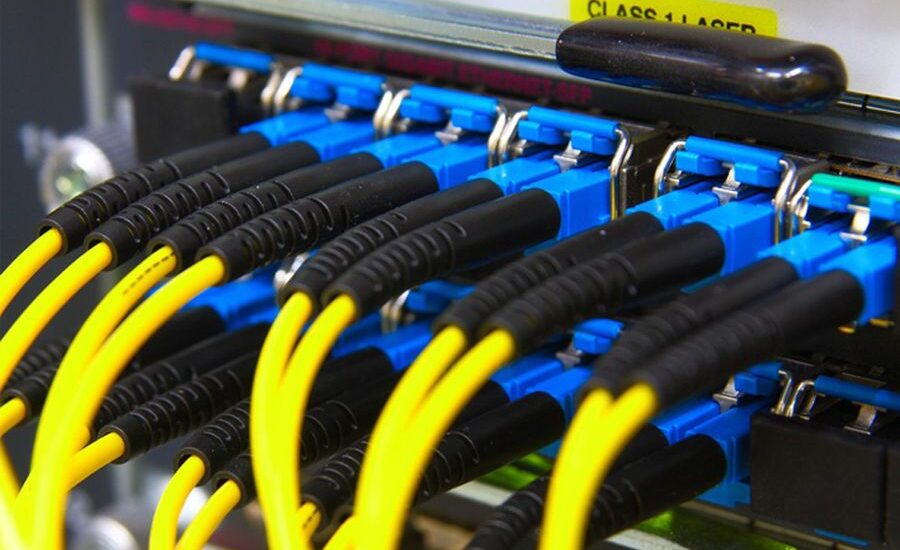
The next generation of telecommunications equipment will focus on adaptability, intelligence, and sustainability. Demand for seamless connectivity everywhere is accelerating innovation beyond traditional network design.
AI-Driven Networks
Future equipment will rely heavily on artificial intelligence. Instead of manual configuration, networks will tune themselves in real time to changing traffic patterns, weather conditions, or security threats. AI could also predict equipment failures days or weeks in advance, reducing downtime and improving service quality. Embedded machine learning chips may become standard in routers, switches, and radio equipment.
Open and Cloud-Native Architectures
The movement toward open standards such as Open RAN will reshape how mobile networks are deployed. Operators will no longer depend on single-vendor stacks. Instead, they will combine hardware and software from multiple suppliers, improving flexibility and price competition. Cloud-native telecom functions running on commercial off-the-shelf hardware will simplify upgrades and speed up innovation cycles.
6G and Communications Beyond Connectivity
While 5G rollout continues, research for 6G introduces entirely new possibilities. Networks may support sensing capabilities that detect motion or environment changes, enabling smart manufacturing and next-level autonomous systems. Terahertz spectrum promises extreme speed and ultra-low latency, connecting billions of devices with near-instant responsiveness.
Energy-Efficient and Sustainable Design
Telecom infrastructure consumes significant power, especially within data centers and radio access networks. Vendors will increasingly adopt recyclable materials, modular construction, and low-energy chipsets. Smart power systems will integrate renewable sources and optimize energy use dynamically. Sustainability certifications may become a competitive requirement.
Cybersecurity Reinvented
Security will move deeper into the hardware layer, with quantum-resistant cryptography protecting communication against future computing threats. Authentication systems may use AI to validate normal behavior patterns and shut down attacks automatically.
Satellite and Non-Terrestrial Networks
Low Earth Orbit (LEO) satellite constellations, along with high-altitude platforms, will offer broadband to areas where fiber or cellular deployments are impractical. Telecom equipment will evolve to seamlessly integrate terrestrial and satellite connectivity, ensuring uninterrupted service worldwide.
User-Centric Network Personalization
Operators may soon implement individualized network performance tiers that adapt to user context. For example, a VR gamer could get a temporary latency boost while a remote worker receives prioritized video calls. Edge devices will help deliver these capabilities without compromising overall network performance.
Related Articles: Review of Modern Telecommunications Equipment